
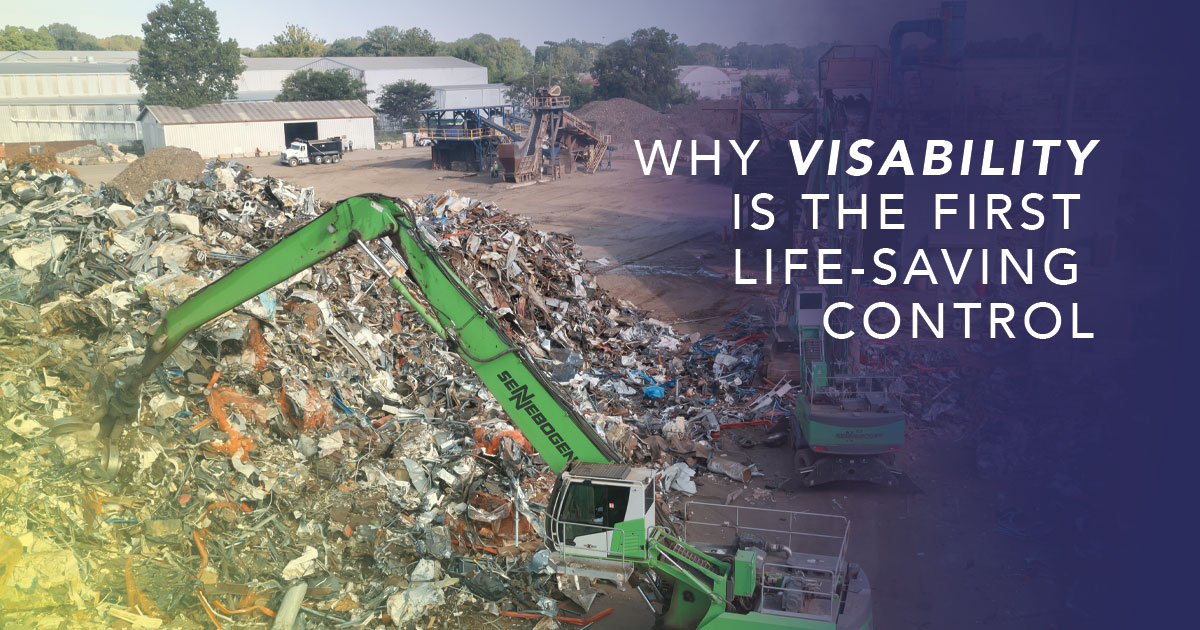
In mobile-equipment environments, safety doesn’t fail all at once.
It fails at the moment someone isn’t seen.
Before alarms sound.
Before sensors activate.
Before procedures can be followed.
A human being must be visible—clearly and early enough—for an operator to react.
This is why visibility is not just a compliance requirement or a piece of PPE. It is the first life-saving control in any environment where people and machines move together.
ANSI Class 2 and Class 3 high-visibility apparel exist for a reason. They increase recognition distance, helping operators identify a person sooner, understand movement faster, and respond with more time and control. That time—often measured in seconds—is the difference between avoidance and impact.
When visibility fails [link to new pyramid page], everything else becomes reactive. Operators brake late. Pedestrians are surprised. Incidents escalate. Technology and policies may reduce harm, but they cannot undo the moment when someone was simply not seen.
Visibility works even when everything else breaks down. It does not require power, connectivity, training refreshers, or perfect conditions. It works in dust, glare, rain, low light, and congestion—precisely where risk is highest.
Visibility saves lives. Everything else depends on it.