
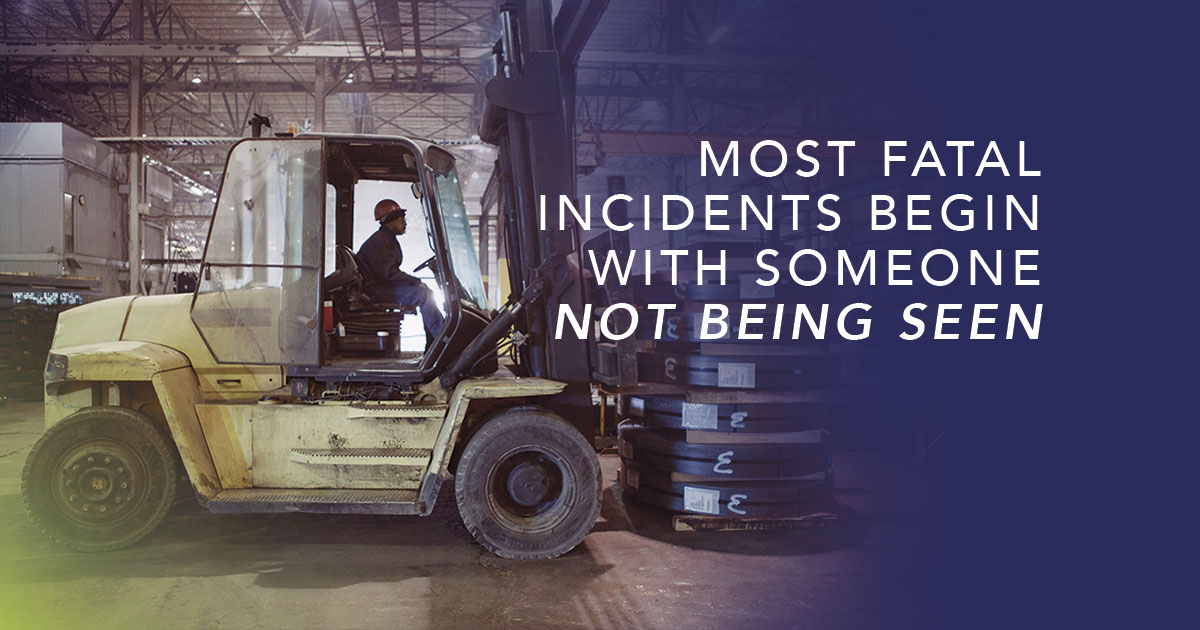
Serious incidents are often explained after the fact with complex causes—procedural gaps, communication failures, weather, and/or equipment issues. But when you trace them back far enough, many begin with the same simple truth:
Someone was not seen in time.
In mobile-equipment environments, pedestrians are inherently vulnerable. Heavy and material handling equipment are large, loud, and powerful. Blind spots exist even on well-designed equipment. Congestion, fatigue, weather, and lighting all compound risk.
Visibility is the one control that directly addresses this vulnerability.
When a person is clearly visible:
- Operators anticipate movement
- Pedestrians behave more predictably
- Near-misses are avoided before they escalate
When a person is not visible:
- Decisions are rushed
- Reactions are delayed
- Outcomes are far more severe
This is why visibility must always come first. Not after technology. Not after procedures. Not after investigations.
Every safety system assumes visibility exists. Without it, those systems are already compromised.
Most fatal incidents don’t begin with failure.
They begin with invisibility.